Search
× Search

Smoking Cessation

Cigarette smoking is responsible for more than 480,000 deaths per year in the United States with more than 41,000 deaths resulting from secondhand smoke exposure alone. Many smokers have a craving for a cigarette in stressful situations but with help and motivation anyone is able to quit.

To Quit Smoking

  • Prepare to quit. The first step to quitting is a true desire to quit smoking. Establish a quit date which can help you prepare emotionally. Prepare by not buying extra cartons of tobacco and eliminating ashtrays in your home. Pick a date that is meaningful to you – birth date, special anniversary, holiday, even a New Year’s resolution.
  • Get help from others. Inform family and friends that you are going to quit and that you will need their emotional support and help.
  • Get help from your physician and voluntary agencies. The CDC has a quit smoking consumer guide available on the web (www.cdc.gov/tobacco). The American Lung Association, the American Heart Association, and the American Cancer Society all have helpful programs.
  • Quit with a friend. People who quit smoking together are more often successful. They can support each other when they feel the need for another cigarette.
  • Get pharmaceutical help. Nicotine, the addictive ingredient in cigarettes, is a drug. You can help yourself by supplying nicotine in another, safer fashion while you quit smoking. Nicotine replacement is available as gums, patches or sprays.
  • Non-nicotine containing medications such as Bupropion (Zyban®) and Varenicline (Chantix®) are prescription drugs that can also help you quit smoking.
  • Help yourself. The desire to smoke is both habit and addiction. When do you have a cigarette in your hand? Try putting something else in your hand. Change your routines where you find that smoking is your pleasure. If you feel smoking helps you with your bad moods, you should try talking with a friend or your doctor, or finding other activities that provide enjoyment such as exercise.
  • If you fail do not despair. On average most permanent non smokers will quit 8 times before finally quitting for good. If you have a set-back, don’t get discouraged, just try again!

The Oklahoma Tobacco Helpline is a great resource that offers free support, services and even smoking cessation therapies:  1-855-335-3569 OR OKhelpline.com

Recent News

SuperUser Account
/ Categories: News

Study shows limited benefits of elimination diets for children with atopic dermatitis
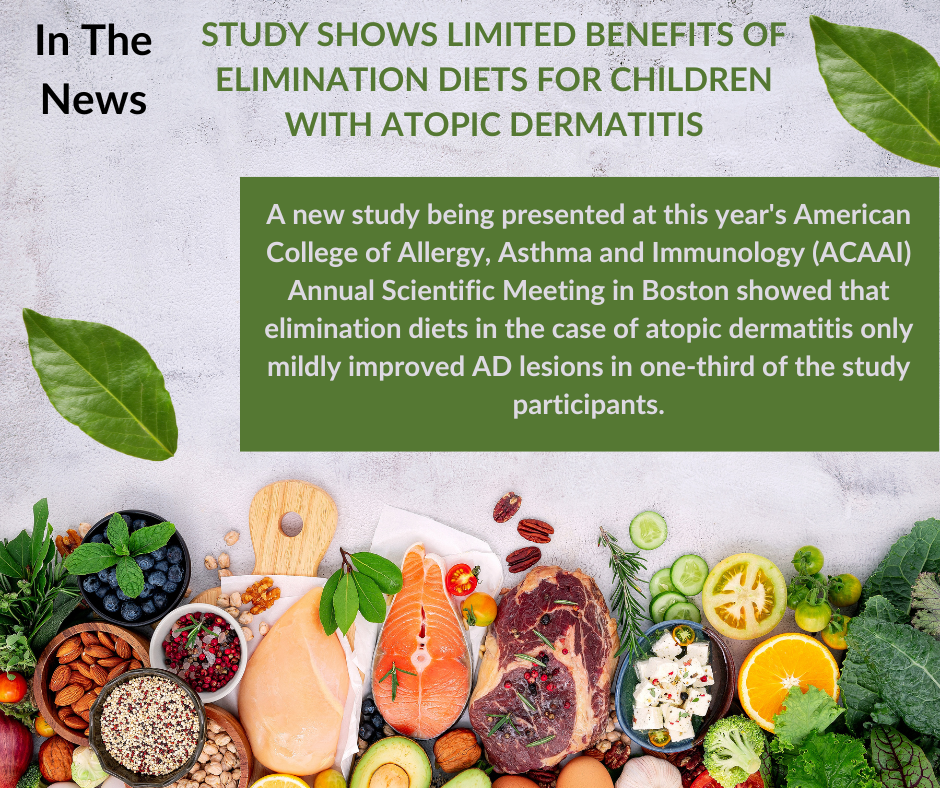
Parents of children with atopic dermatitis (AD, also called eczema) know that the allergic condition can mean a heightened risk of developing food allergies. The desire to prevent food allergies causes some parents to consider elimination diets, cutting out certain foods from their child’s diet. A new study being presented at this year’s American College of Allergy, Asthma and Immunology (ACAAI) Annual Scientific Meeting in Boston showed that elimination diets in the case of atopic dermatitis only mildly improved AD lesions in one-third of the study participants.

Elimination diets aren’t recommended as a treatment for AD, according to guidelines from major allergy organizations. For our study, parents of infants and children with AD completed a survey in a number of sites in a single health care system including the emergency department, allergy, dermatology and general pediatrics clinic to gauge their perceptions of the effects of elimination diets on development of food allergies.” –Nadia Makkoukdji, MD, pediatric resident, lead author of the study

298 parents completed the survey. 42% reported that certain foods exacerbate their child’s eczema. The foods most frequently identified as triggers were milk (32%), tree nuts/seeds/peanuts (16%,) and eggs (11%).

Among those who identified food triggers:

  • 19% changed their baby’s formula
  • 20% eliminated certain foods from their diet while breastfeeding and
  • 23% completely removed the suspected foods from their child’s diet.

Regarding the elimination diet’s effectiveness, 38% observed no improvement in AD, 35% reported 25% improvement, and 9% noted complete resolution. Additionally, 79% of responders reintroduced the eliminated foods without recurrence of eczema symptoms. The authors concluded that parents’ understanding of AD and its dietary links significantly influenced their children’s diets.

Source: American College of Allergy, Asthma, and Immunology

The post Study shows limited benefits of elimination diets for children with atopic dermatitis appeared first on Oklahoma Allergy and Asthma Clinic.

Previous Article CDC approves monovalent COVID-19 boosters for adults
Next Article Study finds connection between air pollution and childhood peanut allergies
Print
58
Terms Of UsePrivacy StatementCopyright 2026 by Oklahoma Allergy and Asthma Clinic
Back To Top