Search
× Search

Smoking Cessation

Cigarette smoking is responsible for more than 480,000 deaths per year in the United States with more than 41,000 deaths resulting from secondhand smoke exposure alone. Many smokers have a craving for a cigarette in stressful situations but with help and motivation anyone is able to quit.

To Quit Smoking

  • Prepare to quit. The first step to quitting is a true desire to quit smoking. Establish a quit date which can help you prepare emotionally. Prepare by not buying extra cartons of tobacco and eliminating ashtrays in your home. Pick a date that is meaningful to you – birth date, special anniversary, holiday, even a New Year’s resolution.
  • Get help from others. Inform family and friends that you are going to quit and that you will need their emotional support and help.
  • Get help from your physician and voluntary agencies. The CDC has a quit smoking consumer guide available on the web (www.cdc.gov/tobacco). The American Lung Association, the American Heart Association, and the American Cancer Society all have helpful programs.
  • Quit with a friend. People who quit smoking together are more often successful. They can support each other when they feel the need for another cigarette.
  • Get pharmaceutical help. Nicotine, the addictive ingredient in cigarettes, is a drug. You can help yourself by supplying nicotine in another, safer fashion while you quit smoking. Nicotine replacement is available as gums, patches or sprays.
  • Non-nicotine containing medications such as Bupropion (Zyban®) and Varenicline (Chantix®) are prescription drugs that can also help you quit smoking.
  • Help yourself. The desire to smoke is both habit and addiction. When do you have a cigarette in your hand? Try putting something else in your hand. Change your routines where you find that smoking is your pleasure. If you feel smoking helps you with your bad moods, you should try talking with a friend or your doctor, or finding other activities that provide enjoyment such as exercise.
  • If you fail do not despair. On average most permanent non smokers will quit 8 times before finally quitting for good. If you have a set-back, don’t get discouraged, just try again!

The Oklahoma Tobacco Helpline is a great resource that offers free support, services and even smoking cessation therapies:  1-855-335-3569 OR OKhelpline.com

Recent News

SuperUser Account
/ Categories: News

Needle-Free Option for Severe Allergic Reactions Expanded for Use in Children
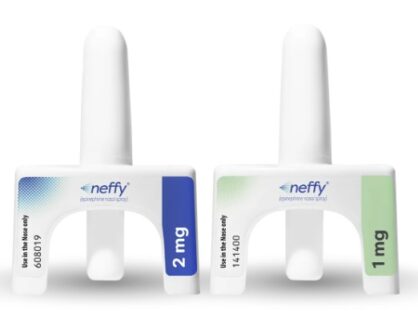
Doctors at the Oklahoma Allergy and Asthma Clinic call the FDA approval a game-changer

Parents now have a needle-free, life-saving option should their child experience a severe allergic reaction.

The U.S. Food and Drug Administration this week approved neffy nasal spray in a one milligram dose, expanding its use to younger children. Neffy is a nasal spray for the emergency treatment of severe allergic reactions, including anaphylaxis. The FDA action means neffy may now be used in children ages four years or older, weighing between 33 and 66 pounds.

The drug was originally approved as a two-milligram dose for individuals over 66 pounds back in August of 2024.

“The approval of one milligram neffy is a game-changer for our young patients who suffer from severe allergies and asthma-related anaphylaxis,” said Dr. Maya Gharfeh, allergy and asthma specialist at the Oklahoma Allergy & Asthma Clinic. “As a physician, I’ve seen firsthand the hesitation and fear that children and parents experience when faced with the need for an epinephrine injection. With neffy, we now have a needle-free alternative that can provide the same life-saving benefits in a less intimidating way.”

Neffy provides a convenient and effective solution for managing life-threatening allergic reactions without the need for injections.

“Anaphylaxis is life-threatening, and some people, particularly children, may delay or avoid treatment due to fear of injections,” said Dr. Kelly Stone, Associate Director of the Division of Pulmonology, Allergy, and Critical Care at the FDA’s Center for Drug Evaluation and Research. “The availability of epinephrine nasal spray may reduce barriers to rapid treatment of anaphylaxis.”

According to the the Asthma and Allergy Foundation of America, anaphylaxis occurs in about one in 50 Americans and some estimates place it as high as one in 20.

“As allergy specialists, we know that some parents of small children may hesitate to use traditional epinephrine auto-injectors due to needle anxiety. Now, we have another option for them,” Gharfeh added.

Neffy is expected to be available in the United States by the end of May 2025.

For more information about the Oklahoma Allergy & Asthma Clinic, visit at www.oklahomaallergy.com or for an appointment, call 405-235-0040.

The post Needle-Free Option for Severe Allergic Reactions Expanded for Use in Children appeared first on Oklahoma Allergy and Asthma Clinic.

Previous Article Not a Cold. Not the Flu. It’s Cedar Fever! Who Knew?
Next Article Important Recall Notice for AIRSUPRA Inhalation Aerosol
Print
60
Terms Of UsePrivacy StatementCopyright 2026 by Oklahoma Allergy and Asthma Clinic
Back To Top