Search
× Search

Urticaria (Hives)/Angioedema (Tissue Swelling)

Urticaria (Hives)/Angioedema (Tissue Swelling)

Most “hives” are caused by histamine and other mediators “released” in the upper layers of the skin.

Histamine can be released from special cells, mast cells and basophils, which are found in everyone’s skin.

Patients with hives release “too much” histamine when it is not needed and are classified as:

  • “Acute hivers” only when they take in an identifiable “trigger”, i.e., drug, food, etc. or if hives last less than 6 weeks.
  • “Chronic hivers” daily or almost daily without an identifiable “trigger” and lasting for greater than six weeks.

In “chronic” urticaria or persistent hives, a “trigger” is rarely found. A “complete” history is needed to look for identifiable “triggers”.

The etiology for chronic urticaria such as medication, heat, pressure or infection is found in less than 5% of patients.

For most cases of chronic urticaria the etiology will remain idiopathic (cause unknown) although an autoimmune etiology can sometimes be found.

  • Angioedema (tissue swelling), occurs in 90% of patients with chronic urticaria

For chronic urticaria laboratory evaluation can be performed: Thyroid auto-antibody profile, CU Index, complete metabolic profile, complete blood count and autoimmunity tests.

Fortunately, most chronic hives go away with or without treatment:

  • 50% of patients hives go away in 3-12 months
  • 20% of patients hives go away in 12-36 months
  • 20% of patients hives go away in 36-60 months
  • 1.5% of patients can have hives for up to 25 years

60% of “chronic” hivers have recurrences of the hives

Management is directed toward keeping patients “comfortable” with or without some hives being present. This can be achieved with “appropriate” antihistamine therapy, and occasionally with “other” medications. Prednisone (steroid) should be avoided if at all possible.

Remember the potency of:

  • Benadryl 50mg. is considered — a strength of 1
  • Clarinex, Claritin, Allegra — a strength of 2-3
  • Atarax (hydroxyzine 25mg.), Zyrtec, Xyzal — a strength of 88
  • Doxepin (Sinequan) 25mg — a strength of 779


Recent News

SuperUser Account
/ Categories: News

Lone Star Tick Bite – Alpha Gal
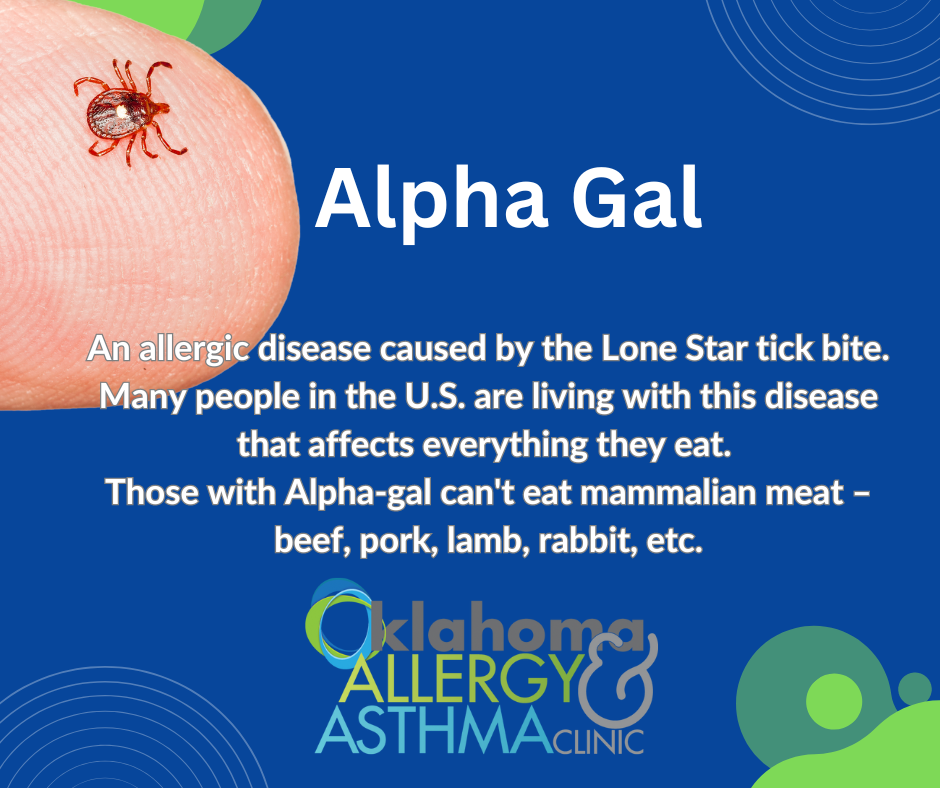
An article in Allergic Living magazine focused on the Alpha-gal allergy – an allergic disease caused by the Lone Star tick bite. However, you may be surprised at how many people are living with this disease that affects everything they eat. Those with Alpha-gal can’t eat mammalian meat – beef, pork, lamb, rabbit, etc. Turns out best-selling author, John Grisham, suffers from this disease, according to the article.

Grisham who keeps meticulous notes, found out in 2012, after working with his allergist on his case of his skin feeling like it was on fire. His hives were actually a reaction to eating mammalian meat.

According to the article, Grisham has become an old pro at managing his meat-restricted diet with the help of his wife, Renee, who also has the disease. He has learned to savor healthy alternatives to beef and pork although he regularly gets red meat cravings.

He and Renee live near Charlottesville, Virginia, while beautiful and historic, is a favorite habitat to the Lone Star tick.

There is no treatment for red meat allergy beyond avoiding the consumption of red meat and in some cases, dairy and gelatin. There is a chance this allergy may resolve over time if the affected person prevents getting another tick bite. As research advances, there is hope a better treatment of red meat allergy will be found.

“With our mild winter, ticks are out, and ready to bite,” says OAAC Board-Certified Allergist Dr. Laura Chong. “Warmer weather means we are starting to spend more time outside. Be sure and take your tick prevention precautions for you and your pets that carry them inside your house.”


The post Lone Star Tick Bite – Alpha Gal appeared first on Oklahoma Allergy and Asthma Clinic.

Previous Article Stinging Insect Allergy Can Ruin Outdoor Activities
Next Article Grass Pollen Allergy
Print
37
Terms Of UsePrivacy StatementCopyright 2026 by Oklahoma Allergy and Asthma Clinic
Back To Top