Search
× Search

Eczema

Eczema is frequently called atopic dermatitis because it was noted to occur in individuals with allergic symptoms, e.g., allergic rhinitis (hay fever) and asthma. The term atopic simply means allergic. Even though eczema was considered to be an allergic problem, allergy seems to be less likely as our understanding of the disease increases. Physicians know that eczema is a very complex disease and contains allergic as well as non-allergic elements in different individuals. As a result, the treatment of every individual may vary.

While the causes of eczema continue to be investigated, certain things are known about the disease. The skin is much more easily irritated than normal skin. Dryness of the skin is a primary component and results in significant itching. Eczema is known as “the itch that rashes”. Itching is made worse by irritants on the skin. Winter months are particularly bothersome because of the dry winter air. Flares in the summer months can occur after exercise because sweat is a significant irritant. Citrus or some vegetables, e.g., tomato, can act as a primary irritant when they touch the skin. Stress in some individuals can affect the skin. While emotional factors may play a role in flaring eczema, they are not considered a primary source of causing the onset of eczema, if it is not already present.

Eczema occurs in about 3% of the population. In about 80% of those individuals, the onset occurs in the first year of life. One-half are free of disease by age 2 years, about one-fourth by the end of adolescence, and the remaining one-fourth will continue to have eczema into adult life. Some individuals do not have the onset of symptoms until adolescence or adulthood.

Treatment is multifaceted and includes lifestyle modification as well as various types of medication. A portion of treatment will be listed in the accompanying tables. Adequate attention to clothing, diet manipulation, and attention to the emotional well-being of the affected patient are very important. It is preferable for a patient with eczema to wear clothing which will not irritate the skin; soft cotton material would be best. The room temperature should be kept moderate with controlled humidity (between 35-50%). Overheating and perspiration should be avoided.

Some investigators believe there is a genetic tendency for eczema with approximately 50% of eczema patients ultimately developing allergic rhinitis and/or asthma. This is compared to about 20% without the presence of eczema. While allergy skin testing and allergy injection treatment are usually helpful in cases of allergic rhinitis and/or asthma, it is generally agreed that this is often not the case with eczema. In some individuals, starting allergy shots for allergic rhinitis and/or asthma may actually result in significant flaring of the eczema.

Prevention

  • Trim fingernails short
  • Cotton gloves at night if needed to decrease scratching
  • Clothing should be double rinsed after washing to remove all residual detergent (irritants)
  • Avoid excessive room temperatures
  • Wear light, non-occlusive clothing (e.g., cotton instead of polyester)
  • Keep the bedroom moderate (cool) and avoid excessive bed clothing
  • Allergen contact or ingestion avoidance (e.g., foods, pets, dust mite) can reduce stimulation of the skin

Treatment

  • Bathing for moisturization, e.g., soaking in tepid water for 30-45 minutes at least once daily and if possible 2-3 times.
  • Within 2 minutes after getting out of the tub, a lubricating cream or ointment should be applied to help hold the moisture in the skin. Examples include Aquaphor, Curel, Moisturel, Eucerin, Keri, Lubriderm, Acid Mantle, Unibase, Vanicream, petrolatum, and chilled Noxzema,etc. Newer medications include Triceram/Certopic, Impruv, Mimyx, Nourica Repair, Cerave, Atopiclair, and Hylira. Some of the newer medications are by prescription only. None of the medications in the above list contain steroids.
  • In general, lotions should be avoided since they contain alcohol which may sting and provide limited moisture.
  • If marked irritation or weeping areas are present, wet wraps with a drying solution (e.g., Burrow’s solution, one tablet mixed in one quart of water is available by prescription) will avoid the stinging or burning sensation that can occur with bathing.
  • Addition of oil or similar substances to the bath water generally has little effect on increasing moisturization.
  • Pat dry with a soft towel; do not “rub” dry since this will remove natural, protective oils from the skin.
  • Showers do not add moisture to the skin and actually remove the protective oils from the skin resulting in increased dryness.
  • Topical steroids are the mainstay of therapy for more severe eczema. Ointments or creams are generally used.
  • Nonsteroidal medications that help the immune system in the skin may be necessary either in addition to or in place of topical steroids if the topical steroids are not adequate for relief. Examples of the nonsteroidal medications are Elidel and Protopic.
  • Antibiotics, topical and/or oral, may be needed if the lesions become infected. An alternative to antibiotics is the use of Clorox baths. One-quarter to one-half cup of Clorox in a full bath provides antibacterial activity that will treat all known bacterial infections. No resistant bacteria to Clorox are known.

Recent News

SuperUser Account
/ Categories: News

Needle-Free Option for Severe Allergic Reactions Expanded for Use in Children
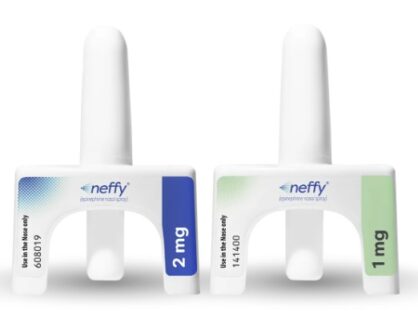
Doctors at the Oklahoma Allergy and Asthma Clinic call the FDA approval a game-changer

Parents now have a needle-free, life-saving option should their child experience a severe allergic reaction.

The U.S. Food and Drug Administration this week approved neffy nasal spray in a one milligram dose, expanding its use to younger children. Neffy is a nasal spray for the emergency treatment of severe allergic reactions, including anaphylaxis. The FDA action means neffy may now be used in children ages four years or older, weighing between 33 and 66 pounds.

The drug was originally approved as a two-milligram dose for individuals over 66 pounds back in August of 2024.

“The approval of one milligram neffy is a game-changer for our young patients who suffer from severe allergies and asthma-related anaphylaxis,” said Dr. Maya Gharfeh, allergy and asthma specialist at the Oklahoma Allergy & Asthma Clinic. “As a physician, I’ve seen firsthand the hesitation and fear that children and parents experience when faced with the need for an epinephrine injection. With neffy, we now have a needle-free alternative that can provide the same life-saving benefits in a less intimidating way.”

Neffy provides a convenient and effective solution for managing life-threatening allergic reactions without the need for injections.

“Anaphylaxis is life-threatening, and some people, particularly children, may delay or avoid treatment due to fear of injections,” said Dr. Kelly Stone, Associate Director of the Division of Pulmonology, Allergy, and Critical Care at the FDA’s Center for Drug Evaluation and Research. “The availability of epinephrine nasal spray may reduce barriers to rapid treatment of anaphylaxis.”

According to the the Asthma and Allergy Foundation of America, anaphylaxis occurs in about one in 50 Americans and some estimates place it as high as one in 20.

“As allergy specialists, we know that some parents of small children may hesitate to use traditional epinephrine auto-injectors due to needle anxiety. Now, we have another option for them,” Gharfeh added.

Neffy is expected to be available in the United States by the end of May 2025.

For more information about the Oklahoma Allergy & Asthma Clinic, visit at www.oklahomaallergy.com or for an appointment, call 405-235-0040.

The post Needle-Free Option for Severe Allergic Reactions Expanded for Use in Children appeared first on Oklahoma Allergy and Asthma Clinic.

Previous Article Not a Cold. Not the Flu. It’s Cedar Fever! Who Knew?
Next Article Important Recall Notice for AIRSUPRA Inhalation Aerosol
Print
55
Terms Of UsePrivacy StatementCopyright 2026 by Oklahoma Allergy and Asthma Clinic
Back To Top