Search
× Search

Allergen Immunotherapy

Purpose

Your individualized course of allergy shots (immunotherapy) is designed to decrease your allergic sensitivities. The vast majority of allergic patients (80-90%) will experience substantial reductions in their symptoms over time (months to years). Many also reduce or eliminate the need for other medications. Together with avoidance of offending allergens and medication allergy shots represent one of the recommended treatments for allergic rhinitis, allergic conjunctivitis, atopic dermatitis and asthma. Allergy shots are not useful for food/drug allergies or non-allergic conditions like infections.

Treatment Duration

The length of a treatment course varies on a case by case basis but in general a course requires 3 to 5 years of maintenance treatment for completion. Initially there is a build-up phase where the injections are given more frequently but as the High Dose, or maintenance dose, is reached the frequency of injections may be adjusted. The total duration of therapy can vary considerably from patient to patient. During your treatment you will be re-evaluated frequently by your physician. These visits will occur at least annually.

Schedule of Administration

Your series of injections begins at a low dose selected by your physician based on your skin test results and history. Over time the shots build gradually until you reach your High Dose. This High Dose is called the maintenance dose and you will stay on it for the duration of your treatment course unless it is changed by your physician. Maintenance therapy can be continued if you are pregnant BUT notify your OAAC physician when you become pregnant.

The build-up phase of the allergy shots can occur in different formats. Your physician will help you decide which is right for you. Most common is the weekly building schedule. Various accelerated schedules include: 2 or 3 time a week shots, clusters of several shots given on the same day and finally RUSH therapy where many injections are given on one day and then weekly shots follow until you are at your High Dose. RUSH therapy is associated with significantly more side effects (see below) and is not for every patient. However, it does bring you to the High Dose level in a month rather than slowly over many months. This is an advantage for some patients.

Safety

All allergy shots carry some risks for severe anaphylactic reactions. Therefore the injections need to be administered in a medical facility under medical supervision on a regular basis. Weekly or twice weekly shots from our clinic carry a risk of anaphylaxis of 0.015 to 0.02% of injections compared to nationally published risks of 0.1 to 0.3% of injections. RUSH therapy carries a nationally published risk of almost 40% of shots whereas our RUSH risk is closer to 10% of injections. This marked increase in risk however makes RUSH therapy unacceptable for many patients.

Recent News

SuperUser Account
/ Categories: News

Needle-Free Option for Severe Allergic Reactions Expanded for Use in Children
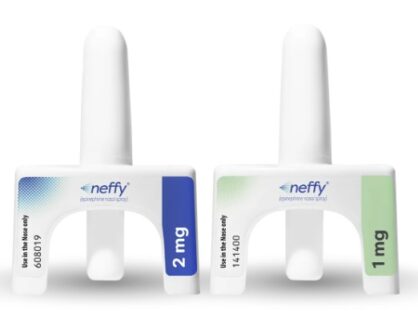
Doctors at the Oklahoma Allergy and Asthma Clinic call the FDA approval a game-changer

Parents now have a needle-free, life-saving option should their child experience a severe allergic reaction.

The U.S. Food and Drug Administration this week approved neffy nasal spray in a one milligram dose, expanding its use to younger children. Neffy is a nasal spray for the emergency treatment of severe allergic reactions, including anaphylaxis. The FDA action means neffy may now be used in children ages four years or older, weighing between 33 and 66 pounds.

The drug was originally approved as a two-milligram dose for individuals over 66 pounds back in August of 2024.

“The approval of one milligram neffy is a game-changer for our young patients who suffer from severe allergies and asthma-related anaphylaxis,” said Dr. Maya Gharfeh, allergy and asthma specialist at the Oklahoma Allergy & Asthma Clinic. “As a physician, I’ve seen firsthand the hesitation and fear that children and parents experience when faced with the need for an epinephrine injection. With neffy, we now have a needle-free alternative that can provide the same life-saving benefits in a less intimidating way.”

Neffy provides a convenient and effective solution for managing life-threatening allergic reactions without the need for injections.

“Anaphylaxis is life-threatening, and some people, particularly children, may delay or avoid treatment due to fear of injections,” said Dr. Kelly Stone, Associate Director of the Division of Pulmonology, Allergy, and Critical Care at the FDA’s Center for Drug Evaluation and Research. “The availability of epinephrine nasal spray may reduce barriers to rapid treatment of anaphylaxis.”

According to the the Asthma and Allergy Foundation of America, anaphylaxis occurs in about one in 50 Americans and some estimates place it as high as one in 20.

“As allergy specialists, we know that some parents of small children may hesitate to use traditional epinephrine auto-injectors due to needle anxiety. Now, we have another option for them,” Gharfeh added.

Neffy is expected to be available in the United States by the end of May 2025.

For more information about the Oklahoma Allergy & Asthma Clinic, visit at www.oklahomaallergy.com or for an appointment, call 405-235-0040.

The post Needle-Free Option for Severe Allergic Reactions Expanded for Use in Children appeared first on Oklahoma Allergy and Asthma Clinic.

Previous Article Not a Cold. Not the Flu. It’s Cedar Fever! Who Knew?
Next Article Important Recall Notice for AIRSUPRA Inhalation Aerosol
Print
81
Terms Of UsePrivacy StatementCopyright 2026 by Oklahoma Allergy and Asthma Clinic
Back To Top