Search
× Search

Allergy Related Websites

American Academy of Allergy, Asthma, and Immunology

Do you have dry Winter skin or skin allergies? Would you like to find out more about your allergy and asthma symptoms with the virtual allergist (an interactive symptom checker)?  Or, would like to watch videos of AAAAI experts talk about what they would do if they had food allergy, asthma and other conditions? The American Academy of Allergy, Asthma & Immunology can answer these questions and more.


image
National Allergy Bureau

The National Allergy Bureau™ (NAB™) is the section of the AAAAI’s Aeroallergen Network responsible for reporting current pollen and mold spore levels. The Aeroallergen Network is comprised of pollen and spore counting stations staffed primarily by AAAAI member volunteers who generously donate their time and expertise. The NAB currently provides the most accurate and reliable pollen and mold levels from approximately 85 counting stations throughout the United States, two counting stations in Canada, and two counting stations in Argentina. The stations use air sampling equipment to collect airborne pollen and spores which are then examined microscopically. This information is also used for research to aid in the diagnosis, treatment and management of allergic diseases. Pollen counts from the NAB stations are based on actual counts, which reflect the real day to day weather events. Predicted counts reported on many websites may be based on pollen data from previous years and general weather forecasts.


image
American College of Allergy, Asthma, and Immunology

Check up on the best health plans:  The ACAAI has introduced a consumer checklist for evaluating allergy & asthma benefits in health plans. If you have allergies or asthma and will be enrolling in a health plan or have an annual open enrollment period for changing plans, you can use this checklist for comparing plan benefits and asking questions.


logo Food Allergy and Research Education
Food Allergy and Research Education

FARE’s mission is to improve the quality of life and the health of individuals with food allergies, and to provide them hope through the promise of new treatments.


logo Better Business Bureau
Better Business Bureau

The Oklahoma Allergy & Asthma Clinic has been an A+ member of the Better Business Bureau since 1950.


Recent News

SuperUser Account
/ Categories: News

Study shows limited benefits of elimination diets for children with atopic dermatitis
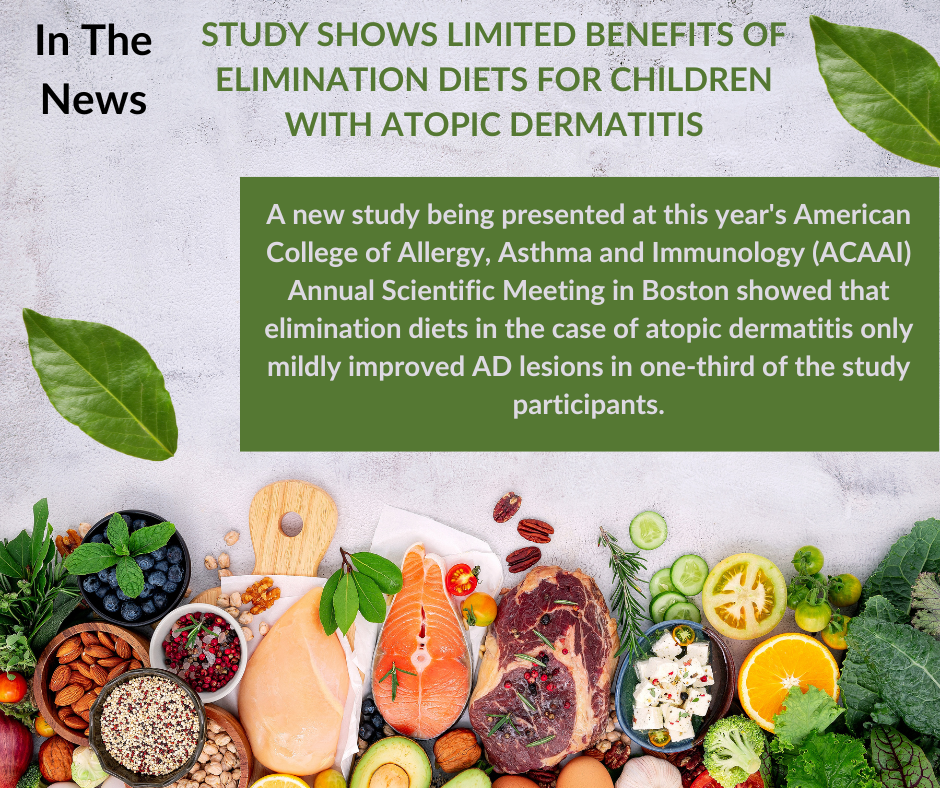
Parents of children with atopic dermatitis (AD, also called eczema) know that the allergic condition can mean a heightened risk of developing food allergies. The desire to prevent food allergies causes some parents to consider elimination diets, cutting out certain foods from their child’s diet. A new study being presented at this year’s American College of Allergy, Asthma and Immunology (ACAAI) Annual Scientific Meeting in Boston showed that elimination diets in the case of atopic dermatitis only mildly improved AD lesions in one-third of the study participants.

Elimination diets aren’t recommended as a treatment for AD, according to guidelines from major allergy organizations. For our study, parents of infants and children with AD completed a survey in a number of sites in a single health care system including the emergency department, allergy, dermatology and general pediatrics clinic to gauge their perceptions of the effects of elimination diets on development of food allergies.” –Nadia Makkoukdji, MD, pediatric resident, lead author of the study

298 parents completed the survey. 42% reported that certain foods exacerbate their child’s eczema. The foods most frequently identified as triggers were milk (32%), tree nuts/seeds/peanuts (16%,) and eggs (11%).

Among those who identified food triggers:

  • 19% changed their baby’s formula
  • 20% eliminated certain foods from their diet while breastfeeding and
  • 23% completely removed the suspected foods from their child’s diet.

Regarding the elimination diet’s effectiveness, 38% observed no improvement in AD, 35% reported 25% improvement, and 9% noted complete resolution. Additionally, 79% of responders reintroduced the eliminated foods without recurrence of eczema symptoms. The authors concluded that parents’ understanding of AD and its dietary links significantly influenced their children’s diets.

Source: American College of Allergy, Asthma, and Immunology

The post Study shows limited benefits of elimination diets for children with atopic dermatitis appeared first on Oklahoma Allergy and Asthma Clinic.

Previous Article CDC approves monovalent COVID-19 boosters for adults
Next Article Study finds connection between air pollution and childhood peanut allergies
Print
43
Terms Of UsePrivacy StatementCopyright 2026 by Oklahoma Allergy and Asthma Clinic
Back To Top