Study shows limited benefits of elimination diets for children with atopic dermatitis
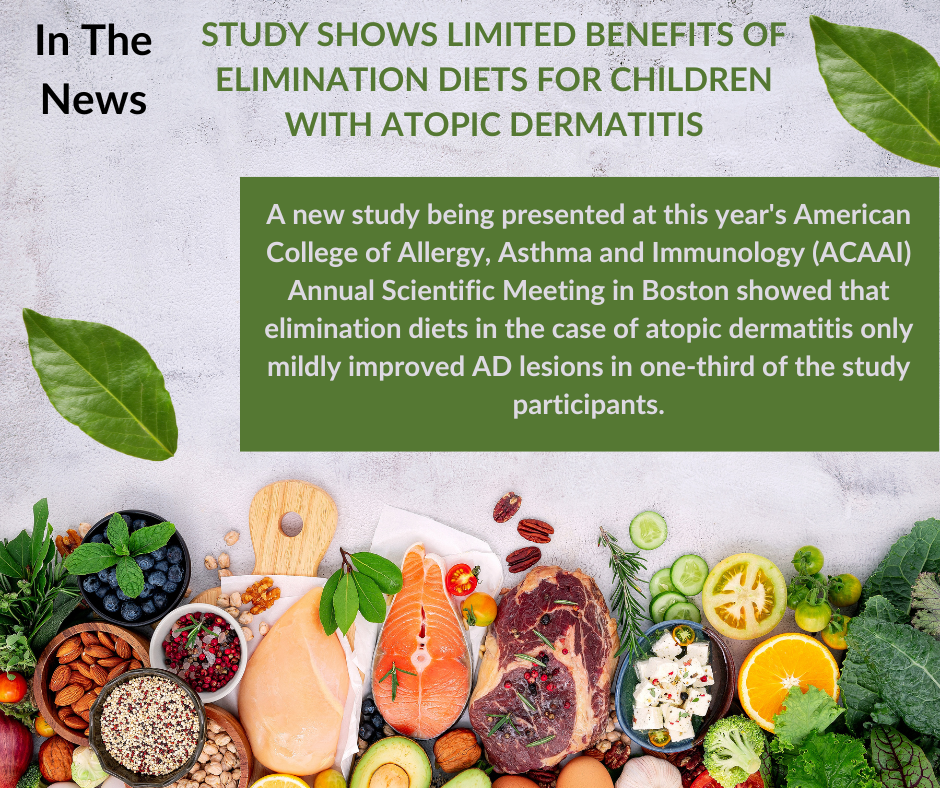
Parents of children with atopic dermatitis (AD, also called eczema) know that the allergic condition can mean a heightened risk of developing food allergies. The desire to prevent food allergies causes some parents to consider elimination diets, cutting out certain foods from their child’s diet. A new study being presented at this year’s American College of Allergy, Asthma and Immunology (ACAAI) Annual Scientific Meeting in Boston showed that elimination diets in the case of atopic dermatitis only mildly improved AD lesions in one-third of the study participants.
Elimination diets aren’t recommended as a treatment for AD, according to guidelines from major allergy organizations. For our study, parents of infants and children with AD completed a survey in a number of sites in a single health care system including the emergency department, allergy, dermatology and general pediatrics clinic to gauge their perceptions of the effects of elimination diets on development of food allergies.” –Nadia Makkoukdji, MD, pediatric resident, lead author of the study
298 parents completed the survey. 42% reported that certain foods exacerbate their child’s eczema. The foods most frequently identified as triggers were milk (32%), tree nuts/seeds/peanuts (16%,) and eggs (11%).
Among those who identified food triggers:
- 19% changed their baby’s formula
- 20% eliminated certain foods from their diet while breastfeeding and
- 23% completely removed the suspected foods from their child’s diet.
Regarding the elimination diet’s effectiveness, 38% observed no improvement in AD, 35% reported 25% improvement, and 9% noted complete resolution. Additionally, 79% of responders reintroduced the eliminated foods without recurrence of eczema symptoms. The authors concluded that parents’ understanding of AD and its dietary links significantly influenced their children’s diets.
Source: American College of Allergy, Asthma, and Immunology
The post Study shows limited benefits of elimination diets for children with atopic dermatitis appeared first on Oklahoma Allergy and Asthma Clinic.
19